Hydraulic Hose Repair & Replacement
Made up at your machine, to the right length and the right fitting.
A burst hydraulic hose is rarely a small problem. The machine stops where it stands, and if it is a hired excavator on a fixed programme, the cost of the downtime very quickly exceeds the cost of the hose.
We come to the machine. The assembly is measured, made up and fitted where the plant is standing, whether that is a compound in Birmingham, a farm track near Balsall Common or a layby on the A38.
Why we make hoses on site rather than carry stock
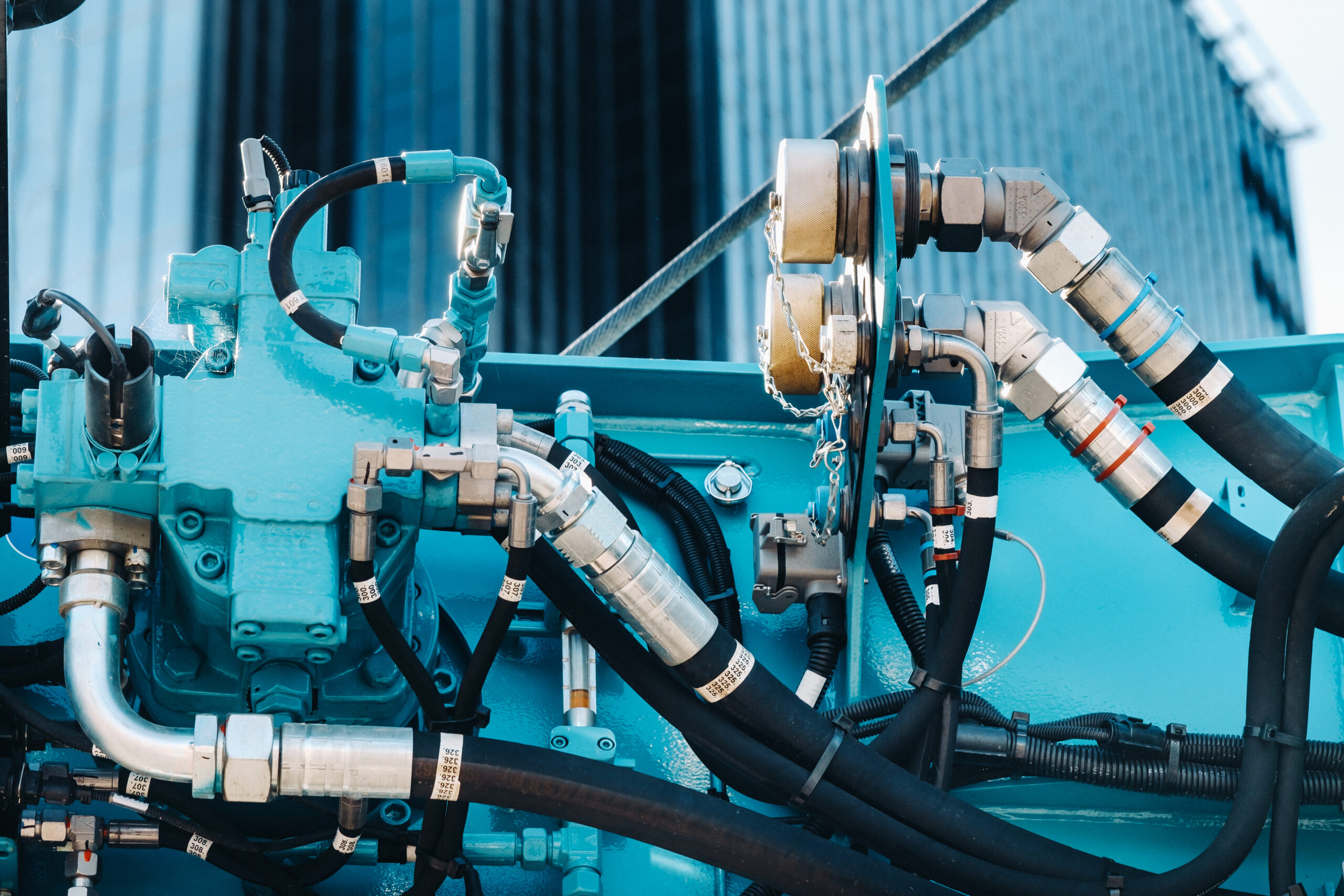
A hydraulic hose assembly is three things that have to agree with each other: the hose itself, the fitting at each end, and the length between them. Get the length wrong by 100mm and the hose either goes taut at full extension or hangs into the slew path. Get the fitting orientation wrong and it seals but sits at an angle that will fatigue.
Carrying a van full of pre-made assemblies means the closest match gets fitted. Making them up at the machine means the right one does. It takes ten minutes longer and it is the difference between a repair that lasts and one you see again in a month.
What causes most of the failures we attend
In roughly the order we see them:
- Abrasion. The hose has been rubbing on a bracket, another hose or the chassis, usually for months. The cover wears through, the reinforcement corrodes, then it lets go. This one is preventable and we will point out where it is happening.
- Fitting fatigue at the crimp. Often a sign the previous assembly was too short, or built with the wrong ferrule.
- Bend radius. A hose forced tighter than its minimum bend radius fails near the fitting, not in the middle.
- Age and heat. Rubber hardens. A ten-year-old hose on a machine that works hot is living on borrowed time even if it looks fine.
- Crush damage. Usually from something being stood on it, or a hose routed where the boom closes on it.
Getting the machine going again
Before we leave, the system gets topped up and the machine put through its movements under load so we can watch the new assembly through its full range. If the routing was the cause of the original failure, we say so, and where we can we reroute or add a wrap rather than fit an identical hose into an identical problem.
What is included
- We measure the failed assembly on site rather than guessing from a parts list, so the replacement routes the same way and does not chafe against the boom or chassis.
- Hose is cut, skived where the fitting needs it, and crimped to the manufacturer specification with a calibrated die.
- Fittings are matched to what is actually on your machine: BSP, JIC, metric, ORFS, NPT or Komatsu.
- Both ends are capped before we carry the assembly to the machine, so no dirt gets into a system you have just cleaned up.
- We take the old hose away and leave you the paperwork for your maintenance records.
Detail
| Hose types carried | 1SN, 2SN, 4SP and 4SH plus thermoplastic |
|---|---|
| Bore sizes | 1/4 in to 1 in as standard |
| Working pressure | To the hose manufacturer rating, 4:1 burst safety factor |
| Fitting standards | BSP, JIC 37 degrees, metric, ORFS, NPT, Komatsu |
| Warranty | Two years on hose and fittings we supply |
Common questions
Can you match a hose without the part number?
Almost always. We work from the failed assembly itself: bore, overall length, fitting type and orientation. A part number helps but it is rarely available on older plant, and it is not how the assembly gets built anyway.
Do you repair the hose or replace it?
We replace it. A hydraulic hose that has burst has failed structurally, and there is no safe way to patch the reinforcement. What we reuse, where it is sound, is the fitting on the machine side.
How long does a hose replacement take?
Once we are on site, a straightforward assembly is usually made up and fitted inside the hour. Buried hoses, or ones that run through a boom, take longer because getting to them is the slow part.
What does the two-year warranty cover?
The hose and the fittings we supply, against failure in normal use. It does not cover abrasion damage, crush damage or a hose that has been run outside its pressure or temperature rating. Terms apply.
Will you work on a machine that is still under manufacturer warranty?
Yes, though it is worth checking your own warranty terms first. We fit hose and fittings to manufacturer specification and give you the paperwork, which is normally what a dealer asks to see.
Machine down? We can usually be with you the same day.
Tell us the machine, the hose and where you are. We will tell you honestly whether we can reach you and what it will cost before we set off.